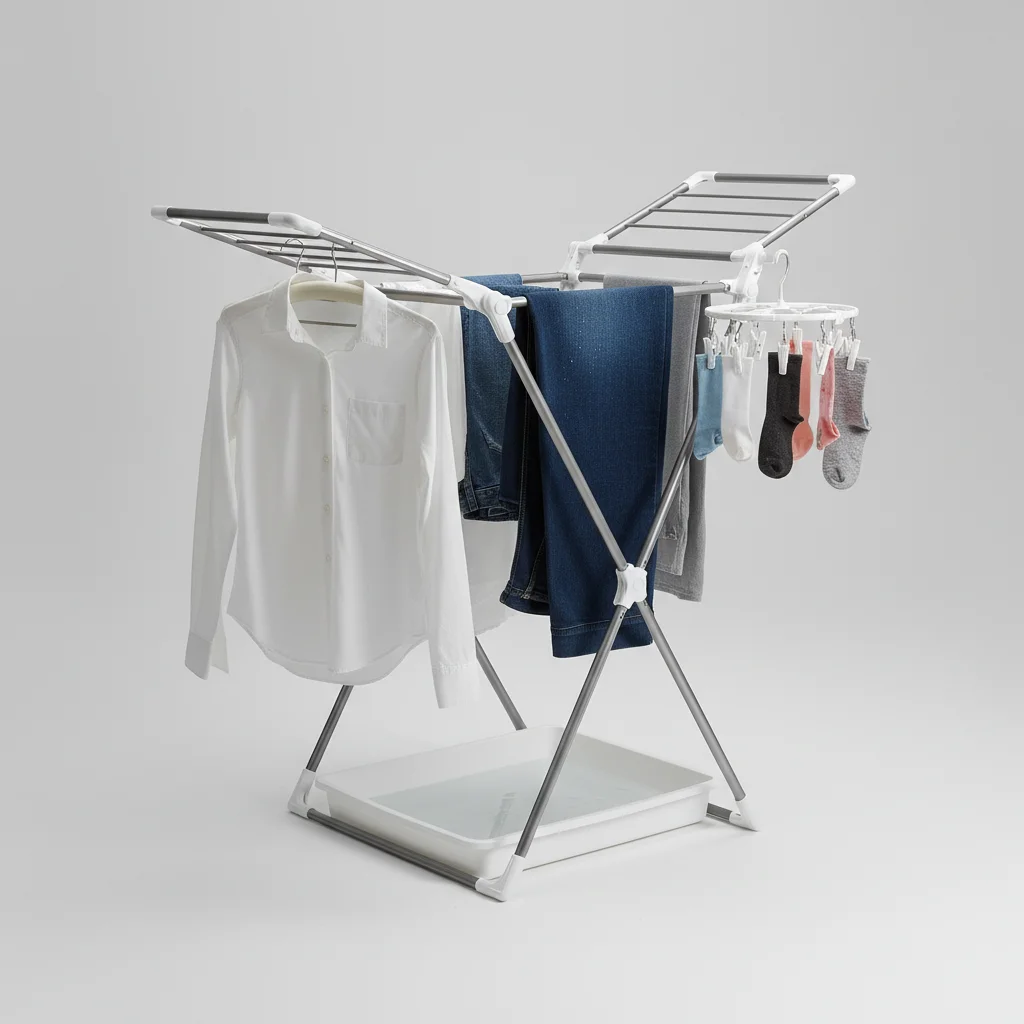
In modern homes, where space is often at a premium and the desire for sustainable living grows, the simple act of drying clothes can become a strategic challenge. Tumble dryers are convenient, but they can be energy-intensive and harsh on delicate fabrics. This is where the wet clothes hanger rack emerges as an unsung hero, offering an energy-efficient, garment-friendly, and often space-saving alternative for managing your laundry, especially when outdoor line drying isn’t an option. Whether you live in a compact apartment, aim to reduce your carbon footprint, or simply want to extend the life of your favorite garments, understanding the diverse world of wet clothes hanger racks is key to a smoother laundry routine.
Understanding Different Types of Wet Clothes Hanger Racks
Wet clothes hanger racks come in a surprising variety, each designed to meet specific needs and spaces. Choosing the right type depends on your available area, the volume of laundry you typically dry, and the kind of garments you handle. For best home organization roundups on this site.
Freestanding Drying Racks
These are perhaps the most common and versatile. They stand on their own and can be moved around as needed, making them ideal for homes with flexible space.
-
Accordion Racks: These classic racks fold out with multiple horizontal bars, offering considerable drying space. They are easy to collapse and store flat when not in use.
-
Gullwing Racks: Named for their side wings that extend upwards like a seagull’s wings, these provide ample hanging space, often with a central flat area for sweaters. They are robust and can handle larger loads.
-
Tripod/A-frame Racks: These designs often feature a central pole with multiple arms extending outwards, allowing garments to hang freely on hangers. They are great for shirts and dresses, preventing creases and promoting quicker drying.
-
Pros: Highly portable, versatile, require no installation.
-
Cons: Occupy floor space when in use, may not be suitable for very small rooms.
Wall-Mounted Drying Racks
Perfect for maximizing space in smaller areas like laundry rooms, bathrooms, or utility closets. These racks are permanently affixed to a wall.
-
Accordion Wall-Mounted Racks: These expand outwards when needed and fold flat against the wall when not in use, offering a neat, space-saving solution.
-
Retractable/Pull-Out Rails: Similar to accordion racks but often more discreet, these systems pull out from a fixed unit on the wall, providing several lines for hanging.
-
Fixed Rails: Simple bars installed on the wall, ideal for hanging clothes directly on hangers or for airing out a few items.
-
Pros: Excellent for saving floor space, out of the way when collapsed, can be installed at optimal heights.
-
Cons: Permanent installation required, less portable.
Ceiling-Mounted Drying Racks
These innovative racks utilize vertical space, keeping your floor area completely clear. They are particularly effective for faster drying as warm air rises.
-
Pulley Systems: Traditional designs that lower and raise a rack of bars using a pulley, making it easy to load and then lift clothes out of the way.
-
Automatic Hangers (with Fans/UV): More advanced models that can lower and raise electronically, sometimes incorporating fans for faster drying and even UV lights for sanitization. These are a high-tech solution for damp conditions.
-
Pros: Frees up floor space entirely, faster drying due to heat convection, can be very discreet.
-
Cons: Complex installation, higher upfront cost for automated systems, limited to specific ceiling areas.
Over-the-Door Drying Racks
A simple and temporary solution for airing a few items without taking up any floor or wall space.
- Pros: No installation, extremely space-saving, portable between rooms.
- Cons: Limited capacity, can’t be used with the door closed (if hanging on the side facing the wall), can block door function.
Specialized Drying Racks
- Mesh Racks: Designed for flat-drying delicate items like sweaters, preventing stretching and maintaining shape. Often stackable or foldable.
- Clip-Style Hangers: Feature multiple clips for drying small items such as socks, underwear, or baby clothes, maximizing compact space.
Key Features and Materials for Wet Clothes Hanger Racks
When selecting a wet clothes hanger rack, beyond its basic type, several features and material considerations will impact its performance and longevity.
Materials
The material of your drying rack is crucial, especially when dealing with wet garments that can cause rust or damage.
- Stainless Steel/Aluminum: These metals are excellent choices due to their durability, lightweight nature, and crucial rust-resistant properties. They are ideal for wet conditions and offer a modern aesthetic.
- Wood (Bamboo/Hardwood): Wooden racks offer a classic, aesthetically pleasing look. High-quality wooden racks are often treated with a waterproof coating to prevent moisture damage, mold, and warping. They require more care and might not be suitable for very heavy, dripping items over extended periods.
- Plastic: Lightweight and generally affordable, plastic racks are resilient against moisture and will not rust. However, they may not be as sturdy or durable as metal options for heavy loads.
- Velvet/Flocked: While not typically used for the primary structure of a wet clothes rack, some specialized hangers for delicate items might feature velvet flocking. For wet clothes, ensure the flocking is waterproof and colorfast to prevent dye transfer or damage.
Capacity and Size
Consider the typical volume of your laundry loads. A small over-the-door rack might suffice for a few delicates, but a family will benefit from a large gullwing or multi-tiered freestanding rack. Always check the linear feet of drying space.
Stability and Durability
A good rack must withstand the weight of wet clothes without wobbling, bending, or collapsing. Look for:
- Sturdy Frames: Often made from coated steel or thick aluminum.
- Quality Joints and Hinges: Essential for folding or collapsible models to ensure they last through repeated use.
- Non-Slip Feet: Prevent the rack from sliding on smooth floors and protect surfaces.
Versatility
Many modern racks offer flexible features to accommodate various garment types:
- Adjustable Arms/Wings: Allows customization of drying space for different items.
- Mesh Panels: Provides a flat surface for sweaters, knitwear, or delicate items that shouldn’t be hung.
- Garment Bars/Hooks: Integrated rails or hooks specifically for hanging clothes on hangers, preventing shoulder bumps and minimizing wrinkles.
- Shoe Drying Attachments: Some designs include special sections or hooks for shoes.
Portability and Storage
For most households, a rack that can be easily folded, collapsed, or disassembled for compact storage is a significant advantage, especially in smaller living spaces. Lightweight designs are easier to move between rooms or even take for travel.
Ventilation
Adequate spacing between the drying bars is crucial for proper airflow. Overcrowding clothes can trap moisture, prolong drying times, and lead to mildew or odors. Look for designs that encourage air circulation.
Advanced Features
Some “wet clothes hanger racks” incorporate technology for faster or more convenient drying:
- Heated Elements: Integrated heating bars can significantly speed up drying time, especially in cold or humid environments.
- Fan Assistance: Some portable or ceiling-mounted units include fans to circulate air, accelerating evaporation.
- Auto-Modes: Certain portable hangers offer hot and cold air modes with automatic shut-off features, providing a mini-dryer experience for individual items or small loads.
Comparing Popular Wet Clothes Hanger Rack Types
Here’s a comparison to help you weigh your options:
| Feature | Freestanding Racks | Wall-Mounted Racks | Ceiling-Mounted Racks | Over-the-Door Racks |
|---|---|---|---|---|
| Space Efficiency | Moderate (folds for storage, uses floor space when open) | High (frees up floor space, flat against wall when closed) | Very High (uses vertical, often unused, space) | High (temporary, uses existing door space) |
| Installation | None (ready to use) | Permanent (drilling required) | Complex (drilling, pulley system, potentially electrical) | None (simply hooks over door) |
| Capacity | Medium to High (depends on model) | Low to Medium | Medium to High | Very Low (for a few light items) |
| Portability | High (easy to move between rooms or outdoors) | Low (fixed location) | Very Low (fixed location) | High (easy to move between doors) |
| Cost | Low to Moderate | Moderate | Moderate to High (especially for automated systems) | Very Low |
| Best For | General laundry, flexible spaces | Small laundry rooms, bathrooms, utility closets | Maximizing space, faster drying for large items | Quick drying of small items, travel |
Wet Clothes Hanger Racks for Specific Needs
Finding the right drying solution often means matching the rack to your unique lifestyle and laundry habits.
For Small Apartments and Limited Spaces
When every square inch counts, space-saving designs are paramount. Wall-mounted accordion racks or retractable rails are excellent choices, folding away neatly when not in use. Over-the-door racks provide temporary hanging space without dedicated floor area. Multi-tiered freestanding racks, while using some floor space, maximize vertical drying, making them more efficient for compact rooms. Look for collapsible designs that can be stored in narrow gaps or under beds.
For Delicate Garments and Sweaters
Delicates like silk, lace, or activewear, and heavy items like sweaters, require special care. High heat from tumble dryers can cause shrinking, stretching, or damage. For sweaters and knitwear, mesh flat-drying racks are indispensable as they allow garments to dry horizontally, preserving their shape. For blouses, dresses, and shirts, using hangers on a sturdy rack prevents wrinkles and unsightly shoulder bumps, reducing the need for ironing. Ensure these hangers have smooth surfaces to avoid snags.
For Children’s Clothes
When drying children’s clothing, safety and practicality are key. Opt for racks made from non-toxic materials, especially if the clothes might come into contact with the rack for extended periods. Plastic or natural wood (with non-toxic finishes) are good options. Clip-style hangers are perfect for small items like socks, bibs, and tiny garments, keeping them secure and organized. Smaller, more compact racks or specialized baby clothes drying solutions can also be found.
For Outdoor Drying
While the term “wet clothes hanger rack” often implies indoor use, many designs are suitable for outdoors. If you plan to air dry outside, choose materials like stainless steel, aluminum, or treated wood that are rust-resistant and weatherproof. Portable freestanding racks are ideal for moving laundry into direct sunlight (great for sanitizing whites) or into the shade (to prevent fading on darks). Always bring outdoor racks indoors during inclement weather to prolong their life.
Tips for Maximizing Drying Efficiency and Longevity
Getting the most out of your wet clothes hanger rack involves a few smart practices:
- Pre-Spin Clothes Thoroughly: Before hanging, use your washing machine’s highest spin cycle to extract as much water as possible. This dramatically speeds up drying time and prevents excessive dripping indoors.
- Ensure Adequate Spacing: Give each garment enough room for air to circulate freely. Overlapping clothes traps moisture and can lead to slower drying and mildew.
- Utilize Airflow: When drying indoors, place your rack in a well-ventilated area. Opening a window, running a fan, or using a dehumidifier can significantly accelerate the drying process, especially in humid climates.
- Rotate and Flip Items: For thicker garments or items that seem to be drying unevenly, flip or rotate them after a few hours to ensure all parts are exposed to air.
- Strategic Positioning: In the winter, position racks near a gentle heat source (not directly on it, which can be a fire hazard) or in the warmest room. In summer, outdoors or near open windows. Sunlight can naturally bleach whites and act as a disinfectant, but keep darks and colors in the shade to prevent fading.
- Regular Maintenance: Keep your rack clean. Wipe down bars regularly to prevent dust or lint transfer to clean clothes. For metal racks, check for any signs of rust and address them promptly. Store foldable racks properly to prevent damage to hinges or frames.
Conclusion
Choosing the right wet clothes hanger rack is more than just buying a laundry accessory; it’s an investment in sustainable living, garment care, and efficient home management. From versatile freestanding models to discreet wall-mounted and space-maximizing ceiling designs, there’s a perfect solution for every household. By understanding the different types, materials, and features available, and by adopting smart drying practices, you can transform your laundry routine, reduce energy consumption, and keep your clothes looking their best for longer. Embrace the power of air drying and discover the difference a well-chosen wet clothes hanger rack can make in your home.
Frequently Asked Questions
Can wet clothes hanger racks cause clothes to smell musty?
No, not if used correctly. Musty smells usually occur when clothes dry too slowly due to poor air circulation or high humidity. Ensure ample space between garments, good ventilation (using a fan or opening a window), and consider a dehumidifier if drying indoors in a humid environment.
Are wet clothes hanger racks safe for all fabrics?
Yes, they are generally safer for most fabrics than tumble dryers, which can cause shrinkage, fading, and wear. They are particularly gentle on delicates like silk, wool, and activewear. For specific items like sweaters, flat-drying mesh racks prevent stretching.
How much weight can a typical wet clothes hanger rack hold?
The weight capacity varies significantly by type and material. Heavy-duty freestanding racks can hold upwards of 40-50 pounds (18-23 kg), while smaller over-the-door racks may only handle a few pounds. Always check the manufacturer’s specifications.
Can I use a wet clothes hanger rack outdoors?
Many metal (especially stainless steel or aluminum with rust-resistant coatings) and treated wooden racks are suitable for outdoor use. However, prolonged exposure to harsh weather elements can reduce their lifespan. It’s best to bring them indoors when not in use or during bad weather.
How do I prevent clothes from dripping water on my floor when using an indoor rack?
Ensure your washing machine’s spin cycle extracts as much water as possible before hanging. For very wet items, you can place a towel or a drip tray underneath the rack. Some racks are even designed to fit over a bathtub to catch drips.
Get our weekly buyer guide
Practical specs, not advice. Unsubscribe anytime.

This was exactly what I needed to optimize my drying space. I’m trying to reduce my carbon footprint, and air drying is a big part of that. The portable rolling rack suggestion was brilliant for my basement, as I can move it around to catch the best airflow. My clothes dry faster and smell fresher now.
I’ve been looking for a better way to dry my delicates without using the dryer, and this guide was super helpful. I ended up getting a wall-mounted accordion rack, and it’s perfect for my small laundry room. It folds away neatly when not in use, which is a huge space saver. My sweaters are finally drying without getting stretched out!
I appreciate the focus on energy efficiency, which is why I wanted a hanger rack. I got one of the over-the-door models mentioned, and while it’s good for small loads, I wish it felt a bit sturdier. It tends to wobble a little if I put too many wet towels on it. Still, it’s better than nothing for my apartment.
The section on different types of racks really opened my eyes. I always just thought of the basic standing ones. I went with a ceiling-mounted pulley system for my utility room, and it’s fantastic for larger items like sheets and jeans. It keeps them out of the way while they dry. Definitely a game-changer for my laundry routine.