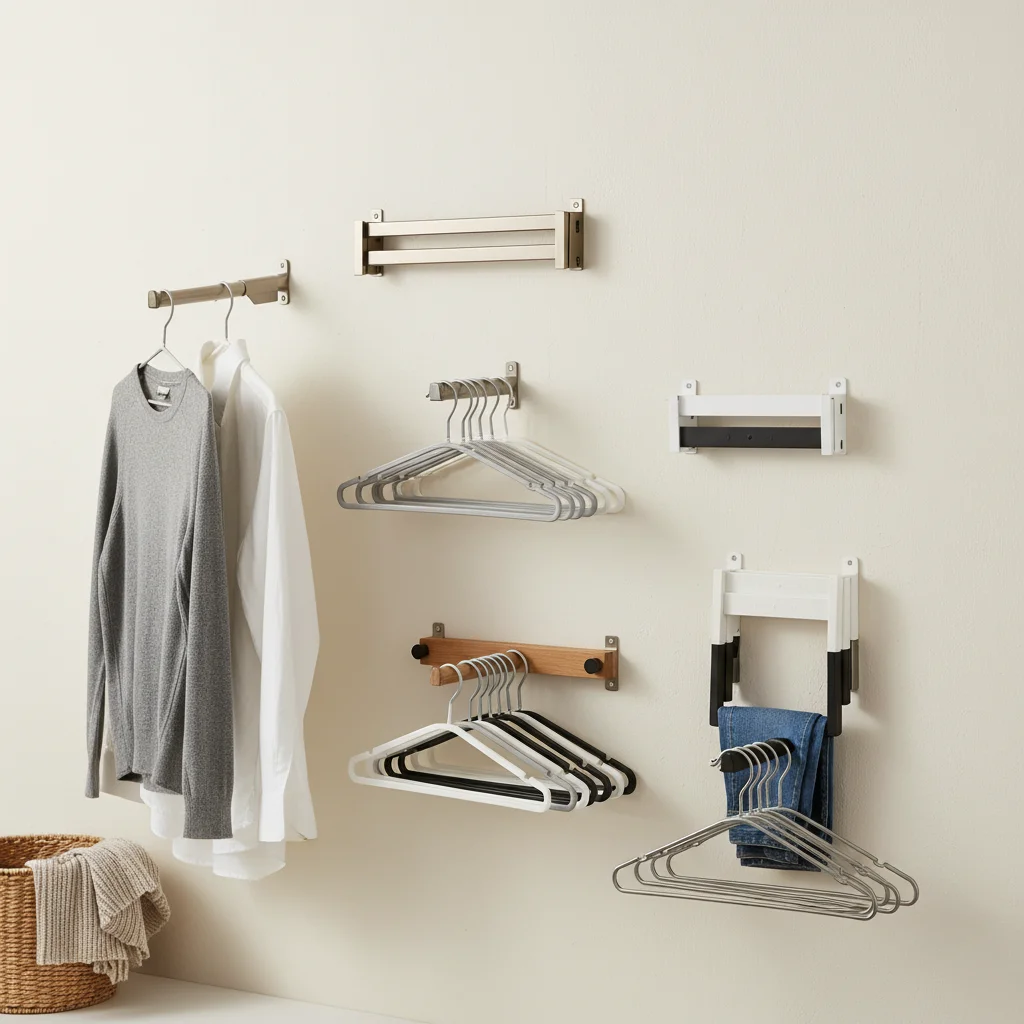
In today’s fast-paced world, optimizing living spaces is more crucial than ever. For many, the laundry room, bathroom, or even a compact apartment presents a constant challenge when it comes to drying clothes or finding temporary hanging space. Bulky drying racks and overflowing closet rails can quickly turn a functional area into a cluttered mess. This is where the ingenious solution of a folding wall-mounted clothes hanger comes into play, offering an unparalleled blend of convenience, efficiency, and sleek design. These versatile devices are engineered to maximize your vertical space, providing ample capacity when needed and discreetly tucking away when not in use.
Understanding Folding Wall-Mounted Clothes Hangers
Folding wall-mounted clothes hangers are innovative fixtures designed to provide instant hanging or drying space directly on a wall. Unlike traditional freestanding racks that consume valuable floor space, these units attach securely to a vertical surface, extending only when required. Their primary appeal lies in their ability to offer significant utility in even the most confined areas, transforming unused wall space into a highly functional zone for laundry or garment organization. From delicate hand-washables to everyday shirts and heavy coats, these hangers offer a practical way to air-dry clothes, prevent wrinkles, and maintain a tidy home environment.
The Essential Role in Modern Living
For urban dwellers, small homes, or anyone looking to declutter, folding wall-mounted clothes hangers are indispensable. They cater to a growing need for smart, adaptive home solutions that don’t compromise on functionality or aesthetics. Imagine a laundry room where wet clothes can air dry without obstructing pathways, or a bedroom closet with an instant extension for preparing outfits. Their discreet nature ensures your living areas remain streamlined and visually appealing, reflecting a mindful approach to home organization.
Types of Folding Wall-Mounted Hangers
The market offers a diverse range of folding wall-mounted clothes hangers, each designed to meet specific needs and preferences. Understanding the different types can help you select the perfect solution for your home.
Accordion-Style Racks
Accordion-style racks, often referred to as pull-out or extendable drying racks, feature multiple parallel rods that pull out from the wall like an accordion and collapse neatly when not in use. These are particularly popular for their substantial drying capacity.
- Pros:
- Maximizes Drying Space: Offers numerous linear feet for hanging clothes, suitable for full loads of laundry.
- Compact Storage: Folds flat against the wall, minimizing intrusion into your space.
- Versatile: Can accommodate various garment sizes and types.
- Cons:
- Can still appear somewhat bulky even when folded, depending on the design and material.
- May require a wider wall space for full extension.
- Materials: Commonly made from stainless steel for rust resistance and durability, or wood for a more aesthetic, traditional look. Some feature powder-coated steel for added protection.
Retractable Rod/Line Systems
These systems typically involve one or more rods or lines that extend from a compact wall-mounted base and then retract back into it, becoming almost invisible when not in use.
- Pros:
- Highly Discreet: Vanishes almost completely into the wall, offering a minimalist aesthetic.
- Space-Efficient: Ideal for extremely tight spaces where even an accordion rack might feel too large.
- Flexible: Can be single rods for hangers or multiple lines for smaller items.
- Cons:
- May offer less overall drying capacity compared to larger accordion models.
- Some models might be limited to hanging items on clothes hangers rather than draping directly.
- Materials: Often constructed from ABS plastic with stainless steel rods, or aluminum alloy for a blend of lightweight and strength.
Swing-Arm Racks/Hooks
Swing-arm racks are compact units with one or more arms that pivot out from a wall-mounted base. They are excellent for small loads, delicate items, or temporary hanging.
- Pros:
- Extremely Compact: Takes up minimal wall space.
- Convenient: Perfect for air-drying a few items, organizing outfits, or hanging damp towels.
- Rotational Flexibility: Arms often rotate 180 degrees, allowing for versatile positioning.
- Cons:
- Limited capacity, not designed for large laundry loads.
- Might be perceived as less “heavy-duty” than multi-rod systems.
- Materials: Can be crafted from solid brass for a touch of elegance and durability, or aluminum for lightweight strength.
Multi-Functional Units
Some folding wall-mounted solutions integrate additional features like shelves or extra hooks, offering combined hanging, drying, and storage capabilities.
- Pros:
- Enhanced Utility: Provides comprehensive organization in one compact unit.
- Optimized Storage: Ideal for laundry rooms where you need space for detergents, fabric softeners, or folded garments.
- Cons:
- Installation can be more complex due to multiple components.
- May have a larger footprint even when folded if it includes shelves.
- Materials: Typically a combination of wood and metal, designed to blend with various home décors.
Key Features to Consider When Choosing
Selecting the ideal folding wall-mounted clothes hanger involves evaluating several crucial features to ensure it meets your specific needs and integrates seamlessly into your home.
Material and Durability
The material dictates the rack’s longevity, weight capacity, and resistance to environmental factors.
- Stainless steel is a top choice for its rust resistance, making it suitable for both indoor and outdoor use, particularly in humid environments like bathrooms or balconies.
- Aluminum alloy offers a lightweight yet sturdy option that is also corrosion-resistant.
- ABS plastic is often used for the main structure, providing durability for everyday use.
- Wood (e.g., maple) can offer a minimalist and aesthetic appeal, often sanded smooth to prevent fabric snagging. Consider water-resistant coatings for use in damp areas.
Weight Capacity
This is critical, especially if you plan to hang heavy items like wet jeans, bath towels, or winter coats. Wall-mounted hangers typically boast impressive weight capacities, ranging from 40 pounds up to 220 pounds, depending on the design and installation. Always check the manufacturer’s specifications and ensure your chosen wall can support the weight.
Drying Space (Linear Feet)
The “linear feet” refers to the total length of rod available for hanging clothes. Accordion-style racks generally offer the most linear feet (e.g., 20 to 22.5 feet), while compact swing-arm or single-rod options may provide less. Consider your typical laundry load size to determine how much drying space you truly need.
Foldability and Retraction Mechanism
The ease with which a hanger folds away is key to its space-saving appeal. Look for smooth, single-handed operation mechanisms. Some models fold almost flush against the wall (e.g., protruding only 1 to 5 inches), making them virtually unnoticeable when not in use. Retraction mechanisms should be robust and reliable.
Installation Requirements
Most folding wall-mounted hangers require screw-in installation for maximum stability.
- Hardware: Verify that all necessary screws, anchors, and templates are included.
- Wall Type: Understand whether the hanger is designed for drywall, masonry (brick or concrete), or requires mounting into wall studs. Installing into studs provides the strongest hold. Some lightweight options may offer adhesive alternatives, but these are generally less sturdy.
- Tools: Standard tools often include a drill, spirit level, measuring tape, pencil, and appropriate drill bits.
Location Suitability
Consider where you plan to install the hanger.
- Indoor: Laundry rooms, bathrooms, utility closets, or even guest rooms can benefit from these.
- Outdoor: Balconies, decks, or exterior walls are ideal for sun-drying, but require weather-resistant materials (stainless steel, treated wood, durable plastics).
Installation Guide: Step-by-Step for Your Wall-Mounted Hanger
Proper installation is paramount to the stability and functionality of your folding wall-mounted clothes hanger. While specific steps may vary by model, here’s a general guide to help you get started.
- Choose the Right Location: Select a wall area with sufficient clearance for the hanger to extend fully. Identify wall studs if possible using a stud finder; mounting into studs provides the most secure attachment. If studs aren’t an option, ensure you use heavy-duty wall anchors suitable for your wall material (drywall, plaster, brick, or concrete).
- Gather Your Tools: You’ll typically need a measuring tape, spirit level, pencil, drill (with appropriate bits for pilot holes and anchors), screwdriver or impact driver, and safety glasses.
- Mark Up the Mounting Points: Hold the hanger’s bracket (or use a provided template) against the wall at your desired height. Use a spirit level to ensure it’s perfectly straight, then mark the screw hole locations with a pencil. Double-check your measurements, especially for multi-bracket systems, to ensure even spacing.
- Pre-Drill Holes: Using your drill, create pilot holes at each marked point. The drill bit size should match the size recommended for your screws and anchors. For masonry, use a hammer drill and masonry bit. Always wear safety glasses during drilling.
- Insert Anchors (if needed) and Secure Brackets: If not drilling into studs, gently tap wall anchors into the pilot holes until they are flush with the wall surface. Then, align the hanger’s brackets with the holes and screw them securely into place using the provided hardware. Ensure all screws are tight, but avoid over-tightening, which can strip screws or damage the wall.
- Assemble and Attach the Rack: Follow the manufacturer’s instructions to assemble any extending rods or arms. Once assembled, attach the main body of the rack to the mounted brackets. Many designs simply slot into place or require a final set of screws.
- Test Stability: Once installed, gently pull and push the rack to ensure it feels secure. Load it with a moderate amount of weight (e.g., a few towels) to test its stability before hanging a full load of wet clothes.
“A well-installed wall-mounted hanger is a game-changer for small spaces. Always prioritize securing it into wall studs or using robust anchors; it makes all the difference for safety and long-term durability.” – Sarah Chen, Home Organization Expert
Maximizing Space and Efficiency with Your Folding Hanger
Once installed, a folding wall-mounted clothes hanger can transform your laundry routine and home organization.
- Optimal Placement: In a laundry room, position it near the washer/dryer for convenience. In a bathroom, above a tub for drip-drying. On a balcony, ensure it receives adequate sunlight and airflow.
- Layering for Drying: Use clothes hangers on the rods for shirts and dresses to prevent wrinkles. For flat-drying delicate items like sweaters, consider placing a mesh drying rack on top of the rods or opting for models with flat drying surfaces.
- Beyond Laundry: These racks are not just for drying! Use them as temporary valet stands for planning outfits, as extra guest closet space, or even for hanging coats and bags in an entryway.
- Regular Maintenance: Wipe down metal or plastic surfaces periodically to prevent dust or lint buildup. For wooden racks, ensure they are kept dry to prevent warping or mold. Check screws and mounting hardware annually to ensure they remain tight and secure.
Top Hanger Styles for Modern Homes
While specific brand recommendations can vary, certain styles consistently receive high praise for their functionality and design:
- Durable Stainless Steel Accordion Racks: Valued for their large drying capacity and rust-resistant properties, ideal for heavy loads and humid environments.
- Super-Compact Retractable Rods: Praised for their near-invisible presence when folded, perfect for minimalist aesthetics and very tight spaces.
- Elegant Solid Brass Swing Arms: Chosen for their blend of sophisticated design and practical utility for smaller drying needs.
These top-rated styles often feature robust construction, easy-to-use folding mechanisms, and included hardware for straightforward installation.
Conclusion
Folding wall-mounted clothes hangers offer an ingenious solution to the perennial challenge of limited space in modern homes. By providing ample hanging and drying capacity that neatly folds away when not in use, they bring unparalleled convenience and organization to laundry rooms, bathrooms, closets, and balconies alike. From robust stainless steel accordions that handle heavy loads to discreet retractable rods ideal for compact living, there’s a perfect space-saving hanger for every need. Investing in one not only frees up precious floor space but also streamlines your daily routines, helping you maintain a tidy, functional, and aesthetically pleasing home.
Are you ready to reclaim your space and transform your home organization with a versatile wall-mounted solution?
Frequently Asked Questions
Are wall-mounted folding hangers strong enough for heavy wet clothes?
Yes, many wall-mounted folding hangers are designed with robust materials like stainless steel or aluminum and can hold significant weight, often ranging from 40 to over 200 pounds. Proper installation into wall studs or with heavy-duty anchors is crucial for maximizing their weight capacity and ensuring safety.
What materials are best for outdoor use?
For outdoor use, materials like stainless steel and powder-coated aluminum are highly recommended due to their excellent resistance to rust, corrosion, and weather elements. Ensure any plastic components are UV-resistant to prevent degradation over time.
How much space do they save?
Folding wall-mounted hangers can save a considerable amount of space. When collapsed, most models protrude only a few inches from the wall, making them virtually invisible. This frees up valuable floor space that would otherwise be occupied by traditional freestanding drying racks.
Can I install a folding wall-mounted clothes hanger myself?
Yes, most folding wall-mounted clothes hangers are designed for DIY installation. They typically come with all necessary hardware and instructions. Basic tools like a drill, spirit level, and measuring tape are usually sufficient. However, for best results and safety, ensure you correctly identify wall studs or use appropriate wall anchors for your specific wall type.
Get our weekly buyer guide
Practical specs, not advice. Unsubscribe anytime.

These folding hangers are such a smart idea! I used to have a bulky drying rack that took up so much floor space in my bathroom. Now, with the wall-mounted option, I have plenty of room and my bathroom doesn’t feel like a cluttered mess anymore. It’s super convenient for air-drying my workout clothes after a wash.
I picked up one of these after reading about how they help with temporary hanging space. It’s decent for what it is, but I found the installation a bit trickier than expected. The anchors provided weren’t the best for my drywall, so I had to get some stronger ones. Once it was up, it worked fine for holding a few shirts, but it’s not as robust as I hoped for heavier items.
I was so tired of my laundry room always being a disaster with clothes draped everywhere. This guide really opened my eyes to the folding wall-mounted hangers. I got one for my small apartment and it’s been a game-changer for drying delicates. It tucks away perfectly when I’m not using it, which is exactly what I needed to maximize my vertical space.
Seriously, if you’re struggling with an overflowing closet rail or just need extra space, you need one of these. I installed one in my guest room for when family visits, and it’s perfect for them to hang their clothes without taking up precious closet space. It’s a sleek design and really does offer unparalleled convenience.