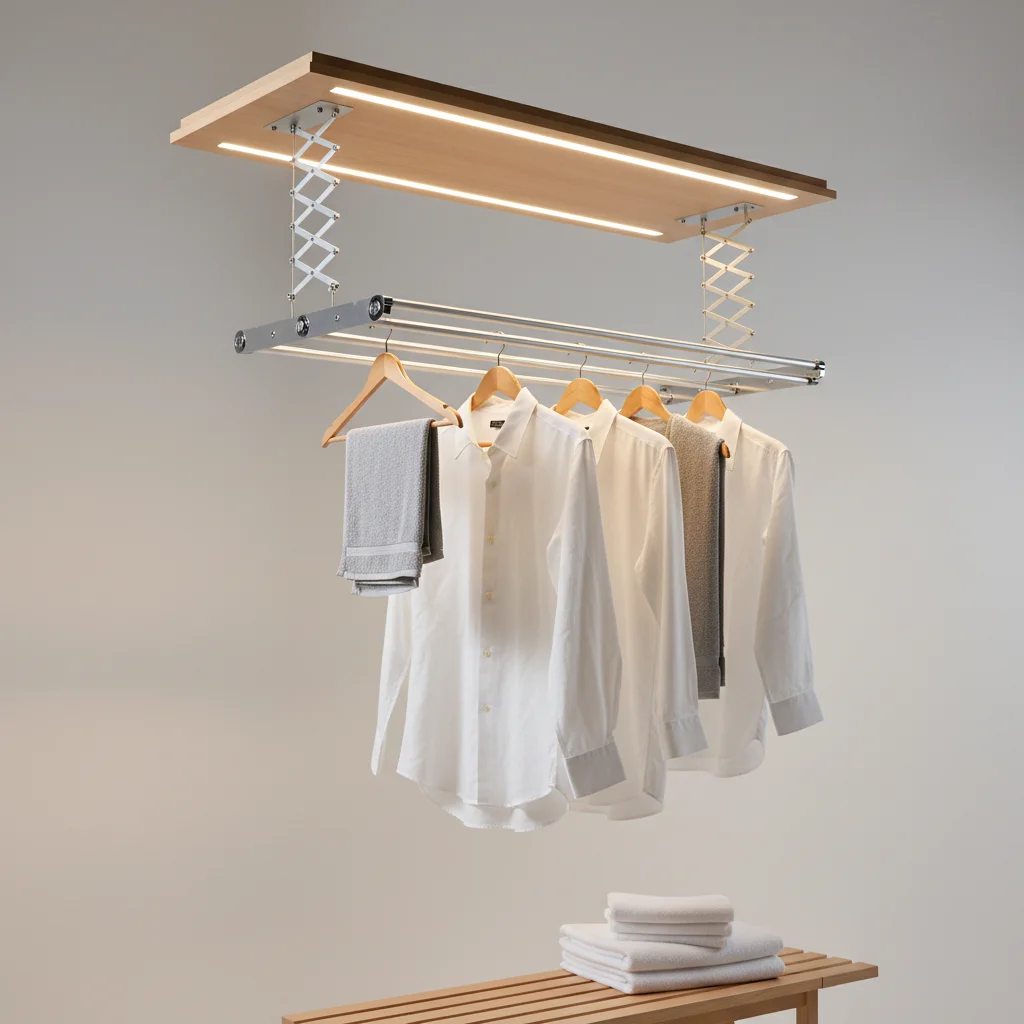
Are you constantly battling a mountain of laundry and a shrinking living space? The never-ending cycle of washing, drying, and finding a spot for everything can turn your home into a cluttered battlefield. But what if you could reclaim your floor space, dry your clothes more efficiently, and even add a touch of modern elegance to your home? Enter the ceiling mounted clothes hanger – an ingenious solution designed to revolutionize your laundry routine.
This comprehensive guide will delve into everything you need to know about ceiling mounted clothes hangers, from the various types available to their significant benefits, key considerations, and a practical installation overview. Get ready to transform your laundry day from a chore into a seamless, space-saving experience. For shop curated home organization on this site.
Ceiling Mounted Clothes Hangers: The Ultimate Space-Saving Solution
Ceiling mounted clothes hangers are a revelation for homes where space is a precious commodity. Unlike bulky freestanding drying racks or traditional clotheslines that monopolize valuable floor area, these innovative solutions utilize the often-overlooked vertical space above. By suspending your laundry overhead, you free up floors for other activities, making them perfect for compact apartments, small laundry rooms, or even multi-purpose areas like balconies.
Beyond just saving space, these hangers contribute to faster drying times. Warm air naturally rises, congregating near the ceiling. Hanging clothes in this elevated zone exposes them to better airflow and higher temperatures, accelerating the evaporation process and preventing the musty odors often associated with slow drying. This not only makes your clothes feel fresher but also helps protect them from potential damage like stretching or pilling that can occur in mechanical dryers, ultimately extending the life of your wardrobe. Visually, a well-chosen ceiling hanger can blend seamlessly with your decor, offering a minimalist, uncluttered aesthetic that enhances the overall appeal of your home.
Types of Ceiling Mounted Clothes Hangers
Ceiling mounted clothes hangers come in a variety of designs, each offering distinct functionalities to suit different needs and aesthetic preferences. Understanding these types is crucial for selecting the best fit for your home.
- Pulley Systems: These are arguably the most popular and versatile type. A pulley system allows you to effortlessly lower the drying rack to a comfortable height for loading and unloading clothes, then raise it back up towards the ceiling once drying begins. This ergonomic design eliminates the need for reaching or straining, making it ideal for everyday use. They typically feature multiple rods for hanging a full load of laundry and are a favorite for laundry rooms and balconies.
- Fixed Rails: For a more minimalist or industrial aesthetic, fixed ceiling rails provide a permanent hanging solution. These are often used for displaying clothing in walk-in closets, retail-inspired bedrooms, or as a static drying rack in high-ceilinged spaces where a fixed height is acceptable. They are generally simpler in design, often made from metal pipes, offering a sleek, modern look.
- Retractable/Folding Racks: While less common than pulley systems for ceiling mounting, some designs offer a retractable or folding mechanism that allows the rack to collapse or retract against the ceiling when not in use, maximizing discretion. These are excellent for rooms where you want the drying function to be almost invisible when not needed.
Materials commonly used include:
- Stainless Steel/Metal: Known for its durability, strength, and modern appearance, metal hangers can support significant weight and are resistant to rust, making them suitable for humid environments.
- Wood: Offering a classic, natural, and warm aesthetic, wooden ceiling hangers can add a touch of elegance. They are sturdy but might require more maintenance in very damp conditions.
Advantages and Disadvantages of Ceiling Mounted Clothes Hangers
Like any home solution, ceiling mounted clothes hangers offer a unique set of pros and cons that should be weighed before making a decision.
Advantages:
- Maximizes Floor Space: The primary benefit is freeing up valuable floor area, making them ideal for small apartments, laundry rooms, or anywhere space is at a premium.
- Faster Drying: Elevated placement in the path of rising warm air and improved air circulation leads to quicker drying times compared to conventional racks.
- Ergonomic Design: Pulley systems allow you to raise and lower the rack with ease, reducing bending and reaching, which is beneficial for your back and arms.
- Protects Garments: Air-drying prevents the wear and tear, stretching, and shrinkage associated with machine dryers, extending the lifespan of delicate clothing.
- Reduces Clutter: When raised, clothes are largely out of sight, contributing to a tidier and more organized living environment.
- Aesthetic Appeal: Modern designs can add a sleek, minimalist, or industrial touch to your interior, integrating storage with style.
Disadvantages:
- Installation Complexity: Mounting requires drilling into solid ceiling joists or reinforced concrete for safety and stability. This might be more complex than assembling a freestanding rack and often requires professional installation, especially for concrete ceilings.
- Weight Limitations: While designed to hold laundry, each model has a specific weight capacity (typically 15-30 kg). Overloading can damage the mechanism or the ceiling structure itself.
- Not Suitable for False Ceilings: False ceilings lack the structural strength required to support a loaded hanger and should never be used for mounting.
- Permanent Fixture: Once installed, they are a permanent feature, offering less flexibility for relocation compared to portable racks. Moving them means dealing with ceiling repairs.
- Potential Accessibility Issues: If not a pulley system or if the ceiling is exceptionally high, reaching the hanger might require a step stool or ladder, which can be inconvenient for frequent use.
- Initial Cost: The initial investment for a high-quality ceiling mounted system, especially if professional installation is needed, can be higher than basic freestanding racks.
Choosing the Right Ceiling Mounted Clothes Hanger: A Buying Guide
Selecting the perfect ceiling mounted clothes hanger involves considering several crucial factors to ensure it meets your specific needs and integrates seamlessly into your home.
Factors to Consider:
- Ceiling Height and Room Size: Measure your ceiling height. For very high ceilings, a pulley system is almost essential for ease of use. In smaller rooms, consider a compact design that doesn’t overwhelm the space when lowered.
- Load Capacity: Assess the average amount and weight of laundry you typically air dry. Always check the manufacturer’s specified weight limit to ensure the hanger can safely support your heaviest items, like wet towels or jeans.
- Material and Durability: Stainless steel and robust aluminum are excellent choices for humid environments like laundry rooms or bathrooms due to their rust resistance and strength. For a warmer aesthetic in a less humid space, a well-finished wooden hanger can be appealing.
- Installation Type (DIY vs. Professional): Are you comfortable with drilling into your ceiling and locating joists? If not, or if your ceiling is concrete or has specific structural considerations, factor in the cost and convenience of professional installation. Safety should always be the top priority.
- Ease of Use: Pulley systems offer unparalleled convenience for raising and lowering. Consider how easily you want to access your clothes.
- Aesthetic Preference: The hanger should complement your home’s interior design. From sleek industrial metal to rustic wooden designs, choose a style that enhances your space.
- Budget: Ceiling mounted clothes hangers vary in price. Determine your budget beforehand, balancing cost with quality, durability, and features.
Expert Advice:
> “Always prioritize safety and structural integrity when installing a ceiling mounted clothes hanger. It’s not just about aesthetics; ensuring proper anchoring into solid joists or concrete is paramount to prevent accidents and damage.” – Dr. Emily R. Chen, Home Organization Expert
Installation: A Step-by-Step Guide for Ceiling Mounted Clothes Hangers
Installing a ceiling mounted clothes hanger requires precision and adherence to safety guidelines. While DIY is possible for those comfortable with tools, professional help is recommended for complex installations or if you are unsure about your ceiling’s structural support.
Tools and Materials You’ll Need:
- Ceiling clothes hanger kit (includes mounting brackets, rods, cords/pulleys)
- Drill with appropriate bits (wood bits for joists, masonry bits for concrete)
- Stud finder
- Measuring tape
- Pencil
- Level
- Screwdriver or impact driver
- Safety goggles and gloves
- Wall plugs/anchors (if installing into concrete)
Installation Steps:
- Locate Ceiling Joists: Use a stud finder to identify the strong structural wooden joists in your ceiling. Mark these spots with a pencil, as these are the most secure points for mounting. If joists are not conveniently located, heavy-duty toggle bolts might be an alternative, but always consult the manufacturer’s instructions.
- Measure and Mark Mounting Points: Determine the desired placement of your hanger, ensuring sufficient clearance for clothes to hang freely. Hold the mounting brackets against the ceiling, mark the screw holes, and use a level to guarantee perfect alignment. For pulley systems, ensure the pulleys are aligned for smooth operation.
- Drill Pilot Holes: Pre-drill holes at your marked spots using a drill bit slightly smaller than your screws. This prevents wood splitting. For concrete ceilings, use a masonry drill bit and insert appropriate wall plugs or anchors.
- Secure Mounting Brackets: Attach the brackets firmly with screws, taking care not to overtighten and strip the screws. Double-check with your level to confirm everything is straight and secure.
- Install Retractable Mechanism (if applicable): Follow the manufacturer’s specific instructions for attaching the pulley system, ropes, or retractable arms. Test the pull-down function and familiarize yourself with any locking mechanisms to prevent accidental drops.
- Load Test and Final Adjustments: Before hanging a full load, test the hanger’s strength with a moderate weight. Ensure all connections are secure and stable. Make any necessary adjustments to rope tension or alignment for optimal performance.
Top Ceiling Mounted Clothes Hanger Considerations
When looking for the best ceiling mounted clothes hanger, focus on features that promise longevity, efficiency, and seamless integration into your home.
- Robust Construction: Opt for hangers made from high-grade materials like stainless steel or powder-coated aluminum for maximum durability and rust resistance, especially if used in humid environments.
- Smooth Pulley Mechanism: For adjustable models, a high-quality pulley system with sturdy ropes or chains ensures effortless raising and lowering, even with heavy loads.
- Adequate Weight Capacity: Choose a model with a weight capacity that comfortably exceeds your typical laundry load to ensure safety and prevent premature wear.
- Ease of Cleaning: Hangers with smooth surfaces and minimal crevices are easier to wipe down and maintain, preventing dust and grime buildup.
- Integrated Design: A hanger that complements your room’s aesthetic, whether modern, industrial, or traditional, will feel like a deliberate design choice rather than a utilitarian addition.
Conclusion
Embracing a ceiling mounted clothes hanger is more than just a drying solution; it’s a smart investment in an organized, efficient, and aesthetically pleasing home. By reclaiming your floor space, accelerating drying times, and protecting your garments, these innovative hangers offer a myriad of benefits that traditional methods simply can’t match. From the convenience of a pulley system to the sleek design of a fixed rail, there’s a ceiling hanger to suit every need and style.
Are you ready to elevate your laundry routine and create a more spacious, clutter-free environment in your home?
Frequently Asked Questions
How much weight can a ceiling mounted clothes hanger typically hold?
Most high-quality ceiling mounted clothes hangers can safely support between 15 to 30 kilograms (33 to 66 pounds) of laundry. Always check the specific weight capacity provided by the manufacturer for your chosen model to ensure safe usage and prevent damage.
Can I install a ceiling clothes hanger on a false ceiling?
No, it is generally unsafe to install a ceiling clothes hanger directly onto a false ceiling. False ceilings are typically not designed to bear significant weight. For secure installation, the hanger must be anchored into solid structural elements like ceiling joists or reinforced concrete.
Is DIY installation feasible, or should I hire a professional?
DIY installation is feasible if you have basic tool knowledge, can accurately locate ceiling joists, and are comfortable with drilling. However, if your ceiling is concrete, you are unsure about structural support, or if local regulations apply, hiring a professional installer is highly advisable to ensure safety and proper installation.
How do ceiling mounted clothes hangers contribute to faster drying?
Ceiling mounted clothes hangers promote faster drying by utilizing the natural principle that warm air rises. By positioning clothes higher in the room, they are exposed to warmer temperatures and often better air circulation, which accelerates the evaporation of moisture compared to clothes drying at floor level.
Get our weekly buyer guide
Practical specs, not advice. Unsubscribe anytime.
